
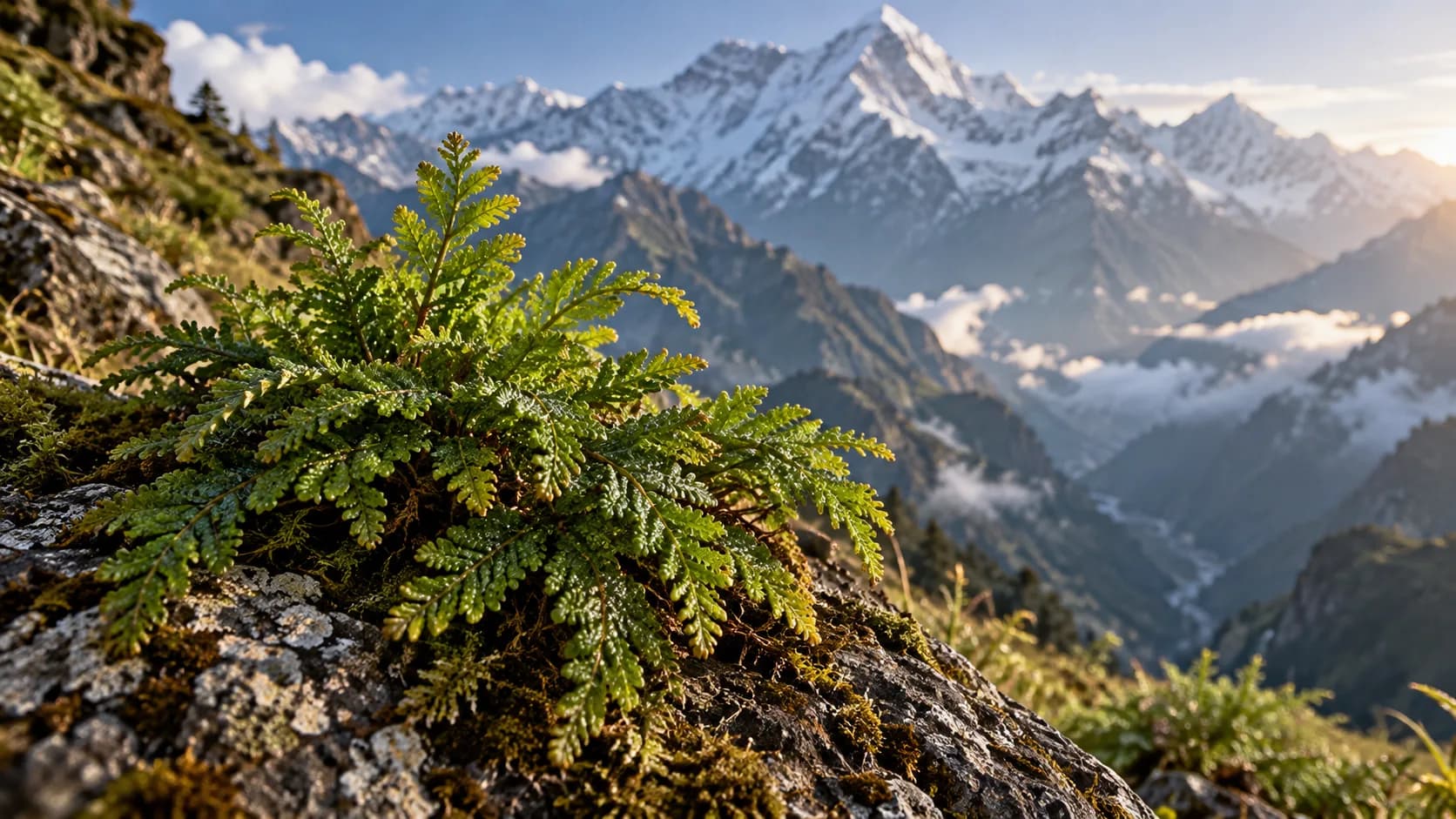
Meet Sanjeevani: A Plant That's as Legendary as Ramayana itself
August 20, 2026
When Lakshmana fell in battle and only the Sanjeevani herb could save him, Hanuman moved an entire mountain to bring it back in time. Few plants carry that weight of legend, but Sanjeevani is more than myth. It exists, and its medicinal properties are extraordinary.
Selaginella bryopteris, called Sanjeevani or Sanjivini booti in Hindi, is a small, inconspicuous fern-ally found on the rocky hillsides of the Western Himalayas, the Vindhya range, and parts of South India. It looks nothing like the towering herb of legend. And yet for centuries, Ayurvedic practitioners have prized it above almost all other medicinal plants.
The Legend That Defined a Civilisation
In Valmiki's Ramayana, Lakshmana is struck down by Indrajit's Brahmastra during the battle of Lanka. Sushena, the physician, declares that only four specific herbs from the Himalayas can save him before sunrise, and Sanjeevani is chief among them. Hanuman flies north, but unable to identify the correct plant, lifts the entire Dronagiri mountain and carries it south.
This story is not merely poetic embellishment. It encodes a profound cultural truth: Sanjeevani was considered so potent, so irreplaceable, that an entire mountain was worth less than the plant that grew on it. Ancient Indian civilisation placed medicinal plants at the apex of value, a philosophy the modern world is only beginning to rediscover.
What Does Science Say?
Modern pharmacological research on Selaginella bryopteris has vindicated much of the ancient reverence. Studies published in journals including the Journal of Ethnopharmacology and Phytomedicine have identified a remarkable profile of bioactive compounds.
- Selaginellin: a potent antioxidant that neutralises free radicals linked to cellular ageing
- Trehalose: a sugar that protects cellular membranes during desiccation (drying out), explaining the plant's legendary revival properties
- Amenoflavone: a biflavonoid with documented anti-inflammatory, antiviral, and neuroprotective activity
- β-sitosterol: a plant sterol shown to reduce LDL cholesterol and support cardiovascular health
- Amentoflavone derivatives: studied for potential anti-tumour properties in laboratory models
The Resurrection Plant
One of Sanjeevani's most extraordinary features is its ability to survive complete desiccation. When deprived of water, it curls into a dry, brown ball that appears entirely dead. When water returns, it unfurls and turns green within hours. This cycle can repeat indefinitely.
This property, known as poikilohydry, is vanishingly rare among vascular plants. The same trehalose compounds responsible for this revival are being studied by pharmaceutical researchers for applications in organ preservation and vaccine stabilisation.
Tip: To demonstrate Sanjeevani's resurrection: let a cutting dry completely in indirect sun for 2–3 weeks until it turns brown and curls. Then submerge it in water for 2 hours. Watch it slowly unfurl and return to full green within the day. It is one of the most visually striking demonstrations in plant biology.
Traditional Ayurvedic Uses
In classical Ayurvedic texts including the Charaka Samhita and Sushruta Samhita, Sanjeevani is prescribed as a Rasayana (a category of herbs said to promote longevity, enhance memory, and restore vitality). Traditional uses documented across Himalayan communities include:
- Wound healing: paste applied externally to cuts, burns, and skin inflammation
- Fever reduction: decoction consumed to lower persistent fevers
- Bone strength: traditionally prescribed following fractures or injury
- Respiratory support: used in steam inhalation for bronchial congestion
- Menstrual regulation: prescribed in small doses for hormonal imbalances
- Cognitive support: consumed as a tonic to improve memory and concentration in older adults
Growing Sanjeevani at Home
Despite its legendary status, Sanjeevani is not difficult to grow. It prefers rocky, well-draining soil, partial shade, and moderate humidity. In Indian conditions, it grows well on balconies that receive morning sun and afternoon shade.
- Soil: Mix of coarse sand (50%) + garden soil (30%) + vermicompost (20%)
- Light: Bright indirect light; avoid harsh afternoon sun
- Watering: Allow to dry completely between waterings, as it handles drought far better than waterlogging
- Pot: Terracotta preferred for its breathability; ensure drainage holes
- Humidity: Occasional misting during dry spells; does not need high humidity like tropical plants
Conservation and Ethical Sourcing
Wild Sanjeevani populations are under pressure from over-collection and habitat loss. The plant is listed as a species of concern by several Indian state biodiversity boards. When purchasing, always choose nursery-grown plants over wild-harvested specimens. Responsible cultivation ensures the legend survives for future generations, not just in epics, but in the real world where it belongs.
“Some plants carry the weight of civilisations in their roots. Sanjeevani doesn't merely heal the body, it connects us to ten thousand years of accumulated wisdom.”
— SiriSattvam Plant Journal
At SiriSattvam, every Sanjeevani we source is nursery-grown, ethically propagated, and delivered with full care guidance. Because a plant this legendary deserves to be treated with as much care as the stories that carry its name.