
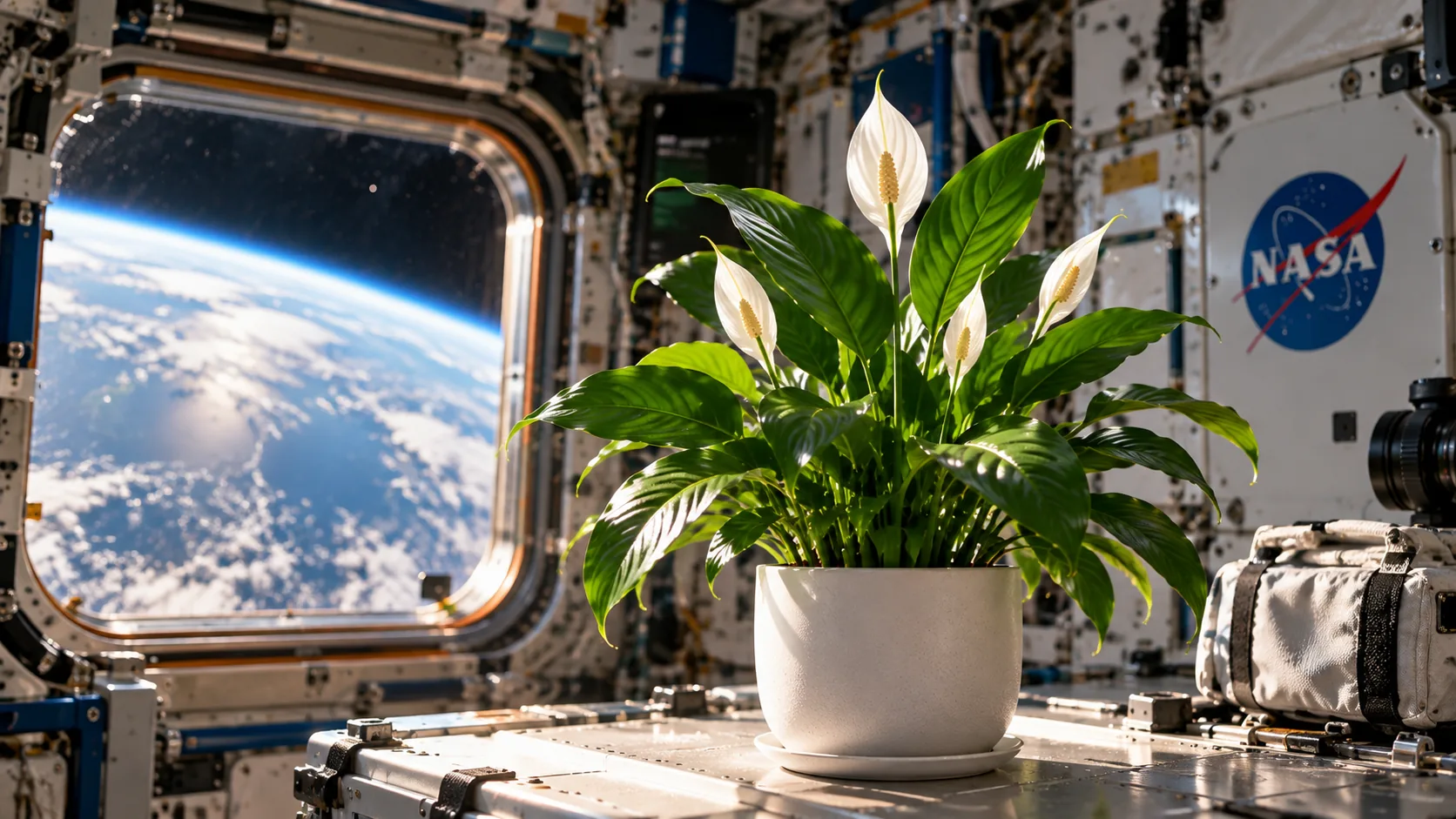
The Peace Lily: NASA's Little Air-Purifying Superstar 🌿🚀
June 5, 2026
In the late 1980s NASA scientists were searching for a way to purify the air inside space stations. What they discovered was that certain common houseplants were as effective as any mechanical filter, and the Peace Lily topped the list.
The Peace Lily (Spathiphyllum wallisii) is one of those rare plants that manages to be both strikingly beautiful and genuinely useful. With its glossy dark-green leaves and elegant white spathes, it graces living rooms, offices, and hospital corridors alike, and for good reason.
The NASA Clean Air Study
In 1989, NASA conducted the landmark Clean Air Study in partnership with the Associated Landscape Contractors of America. The study tested 19 common indoor plants for their ability to remove volatile organic compounds (VOCs) from sealed chambers. The Peace Lily performed among the best, showing measurable reductions in five of the most common indoor air toxins.
- Benzene: found in paints, furniture wax, and detergents
- Formaldehyde: off-gassed from pressed wood furniture and carpets
- Trichloroethylene: present in adhesives, paint removers, and dry-cleaned fabrics
- Ammonia: common in cleaning products and fertilisers
- Xylene: found in rubber, leather, and tobacco smoke
While one plant per 9 square metres was the general recommendation from the study, even a single Peace Lily placed near electronics or in a freshly painted room offers a meaningful reduction in airborne toxins.
Why Is It So Effective?
The Peace Lily purifies air through a dual mechanism. The leaves absorb gaseous toxins through tiny pores called stomata, which are then broken down by micro-organisms living in the root zone. This soil-root microbiome partnership is just as important as the leaf surface itself, which is why healthy, well-aerated soil supports better air purification.
How to Care for Your Peace Lily
Light
Peace Lilies are shade-tolerant champions. They thrive in indirect light and can even survive in rooms with only fluorescent lighting, making them perfect for offices. Direct afternoon sun will scorch their leaves.
Water
Water only when the top inch of soil is dry. Peace Lilies are dramatic: they will visibly droop when thirsty, then perk back up within hours of being watered. This makes them forgiving for beginners. Overwatering is a far more common killer than underwatering.
Humidity
As tropical plants, Peace Lilies love humidity. In dry Indian summers, mist the leaves every other day or place the pot on a pebble tray filled with water. This also helps the leaves stay dust-free, maximising their air-purifying capacity.
Feeding
Feed once a month during the growing season (February to October) with a balanced liquid fertiliser diluted to half strength. Over-fertilising causes brown leaf tips, a common complaint that is entirely avoidable.
Tip: Place a Peace Lily in your bedroom. Studies suggest it also raises humidity levels slightly, which can ease respiratory discomfort during winter nights. Just keep it out of reach of pets and young children, as it is mildly toxic if ingested.
Getting It to Bloom
The elegant white flower (technically a spathe) appears in spring and sometimes again in autumn. To encourage blooming, give the plant a brief cool period (reduce temperatures by about 5°C for 6–8 weeks) and ensure it gets 12–14 hours of indirect light daily. A diluted phosphorus-rich fertiliser in late winter also promotes flowering.
“The Peace Lily doesn't ask for much: just a little shade, consistent moisture, and a home free of cold draughts. In return, it quietly cleans the air you breathe every single day.”
If you're looking for your first houseplant or your fiftieth, the Peace Lily earns its place on any shortlist. It is forgiving, beautiful, purposeful, and NASA-approved.